
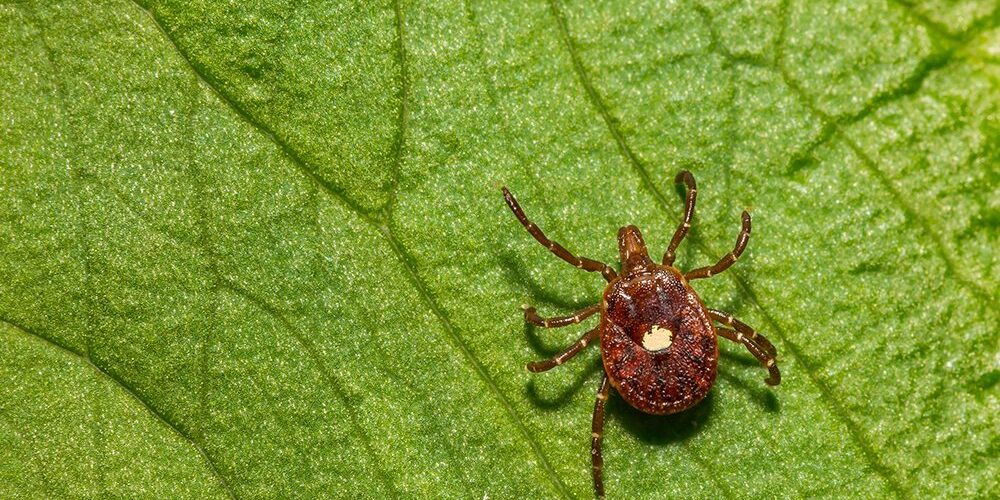
The Lone Star Tick Has Arrived in Dubuque
The Lone Star Tick Has Arrived in Dubuque—and It’s Spreading Nationwide: What Pet Owners Need to Know
If it feels like ticks are getting worse every year… you’re not imagining it.
Across the United States—and now firmly here in Dubuque—we’re seeing a major shift in tick populations. For years, the primary ticks in our area were the deer tick (the main carrier of Lyme disease) and the brown dog tick.
Now, the Lone Star tick (Amblyomma americanum) has officially moved in.
It is no longer a rare or occasional visitor. It is established, expanding, and here to stay.
Meet the Lone Star Tick
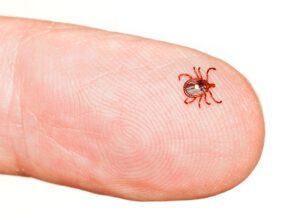
The Lone Star tick is named for the distinct white dot on the back of the adult female.
What makes this tick different—and more concerning:
- It actively seeks out hosts instead of waiting passively
- All life stages bite (larvae, nymphs, and adults)
- Early stages are extremely small and easy to miss
- It is more aggressive and more likely to attach than many other ticks
Compared to other species, Lone Star ticks are often encountered in higher numbers and over a longer portion of the year.
Where Are They Found? (Yes—Even in Your Backyard)
This is one of the biggest changes we are seeing both locally and nationally.
Ticks are no longer limited to wooded trails or rural properties.
Lone Star ticks thrive in:
- Lawns and backyard grass
- Neighborhood parks and green spaces
- Walking paths, sidewalks, and landscaping
- Playgrounds and schoolyards
- Suburban and urban environments
They do not need dense woods or heavy brush to survive.
If there is vegetation—grass, plants, or shade—there can be ticks.
In Dubuque and surrounding communities, we are now routinely seeing pets pick up ticks from:
- Quick bathroom breaks in their own yard
- Short neighborhood walks
- Visits to local parks
You do not need to leave town—or even your own yard—to encounter ticks anymore.
This shift is being seen nationwide as Lone Star ticks continue to expand northward and into more populated areas.
Life Cycle: Why They’re So Hard to Avoid
Lone Star ticks have a three-host life cycle, meaning they feed on a different host at each stage:
- Larvae (“seed ticks”)
Hatch in large clusters and often attach in groups - Nymphs
Extremely small, difficult to detect, and highly active - Adults
Larger and easier to see, preferring larger hosts like dogs, deer, and people
Every stage requires a blood meal to progress—and every stage can bite your pet.
What Diseases Do They Spread?
The Lone Star tick is associated with a growing list of diseases affecting both pets and people:
- Ehrlichiosis
- Tularemia
- Cytauxzoonosis (life-threatening in cats)
- Southern Tick-Associated Rash Illness (STARI)
- Heartland virus
- Bourbon virus
- Rocky Mountain Spotted Fever (RMSF)
It is also linked to Alpha-gal syndrome, a potentially serious red meat allergy in people that can develop after a tick bite.
While it is not the primary carrier of Lyme disease, its presence increases overall tick exposure risk.
Lyme disease remains very common in the Midwest, including Dubuque. If you haven’t yet, we recommend reading our full guide:
Lyme Disease in Dogs: What Every Pet Owner Should Know
Ticks Are a Year-Round Problem
One of the most important changes in tick behavior is activity outside of traditional “tick season.” Learn more from our Tick Blog.
Ticks become active at temperatures above 30°F.
That means:
- Winter warm spells can bring active ticks
- Early spring activity begins quickly
- Fall activity lasts longer than expected
This is true in Iowa and across much of the United States.
There is no longer a true off-season, which is why consistent, year-round tick prevention for dogs and cats is more important than ever.
Prevention: Not All Tick Products Are Equal
This is where we see the most confusion—and where the right choice makes a major difference.
Different products protect differently against different tick species.
With the Lone Star tick now established in our area, choosing the right tick prevention for dogs—and using it consistently—is critical.
Monthly Oral Preventatives (Most Reliable Protection)
These medications:
- Begin killing ticks within hours (NexGard and NexGard Plus typically within 4–8 hours)
- Provide consistent protection for a full 30 days
- Avoid gaps in coverage when given monthly
At PetMed of Key West in Dubuque, we most commonly recommend NexGard and NexGard Plus because they provide fast, reliable protection and align well with the tick species we are actively seeing in our area. Need prevention? You can purchase them here.
With aggressive ticks like the Lone Star tick, consistency matters. Monthly protection without gaps is key.
Topical Option
This is a strong option, particularly for cats.
Important note:
- Takes about 3 days to reach full effectiveness
- Provides full monthly protection once active
Bravecto (Important Limitation for Lone Star Ticks)
Bravecto is effective for many tick species, but there is a key limitation:
- Provides protection against Lone Star ticks for approximately 8 weeks
- Standard dosing is every 12 weeks
This creates a 4-week window where protection is reduced.
In areas where Lone Star ticks are established—including Dubuque—this gap can be significant.
Tick Collars
This is the only collar we consider reliably effective against ticks in our region.
What This Means for Pet Owners in Dubuque (and Beyond)
Whether you live in Dubuque, a surrounding town, or another part of the country experiencing similar tick expansion, the recommendations are the same:
- Use prevention every month, year-round
- Choose a product that provides consistent coverage
- Avoid gaps in protection
- Understand that ticks are now a backyard and neighborhood issue—not just a hiking risk
The Bottom Line
The Lone Star tick is expanding across the United States and is now firmly established in Dubuque and surrounding communities.
It is more aggressive, more adaptable, and more widespread than many of the ticks we have dealt with in the past.
And importantly—it is no longer limited to rural or wooded areas.
If your pet is walking on grass, spending time in a yard, or visiting a park, there is potential exposure.
The good news is that we have effective tools to protect pets.
The key is using the right product, the right way, every single month.
FAQ
Are ticks really active in winter?
Yes. Any time temperatures reach about 30°F or higher, ticks can become active.
Can my dog get ticks in the city or backyard?
Yes. We are now commonly seeing ticks picked up from yards, neighborhood walks, and parks. Any green space can be a risk.
Is Lyme disease still a concern?
Yes. Lyme disease remains very common, especially in the Midwest, but the Lone Star tick adds additional disease risks. Learn more here.
What is the best tick prevention for dogs?
For most dogs, a consistent monthly preventative with no gaps in coverage is the most reliable protection. We prefer Nexgard or Nexgard Plus. Purchase in store or online here.
Is one missed dose a big deal?
It can be, especially with aggressive ticks like the Lone Star tick that actively seek hosts.
Local Care You Can Trust
PetMed of Key West proudly serves Dubuque, Asbury, Peosta, Epworth, Dyersville, Farley, and surrounding communities.
Written by: Dr. Mackenzie Hellert